Research has found a link between higher densities of robots in a population and increased levels of productivity.
The study – conducted by supply chain specialists Balloon One – analysed countries with similar levels of manufacturing output and looked at their densities of robots and GDP per hours worked.
The UK, in particular, is falling behind in robot density:

(Credit: Balloon One)
The UK is the glaring example here but, aside from some outliers, there appears to be a general link between robot density and productivity:

(Credit: Balloon One)
Balloon One’s research found that:
- For countries with a robot density of 200 and above, the average productivity is GDP $53.81 per hour worked and the average manufacturing levels are 71% of GDP.
- For countries with a robot density between 150–199, the average productivity is GDP $52.17 per hour worked and the average manufacturing levels are 43% of GDP.
- For countries with a robot density between 85–149, the average productivity is GDP $44.88 per hour worked and the average manufacturing levels are 86% of GDP
Craig Powell, Managing Director at Balloon One, said:
“This analysis shows that countries with a robot density of 150 or more are, on average, experiencing higher productivity levels than those with a robot density of 149 or less. While it could be argued that this is a result of some nations being more focused on manufacturing as part of their economy, and therefore having developed better infrastructure to meet demand, higher levels of productivity aren’t skewed towards nations that rely more heavily on manufacturing. In fact, manufacturing levels are, on average, higher (17.86% of GDP) in less-robot-dense nations.
Because there is a correlation between robot density and higher levels of productivity, it seems that if the UK increased its robot density, it could boost productivity. This begs the question of whether the country should invest more in automation if it wants to see a boost in its manufacturing productivity. It certainly seems to be working for nations of a similar standing.”
Societal concerns remain that robots and automation will replace human jobs. However, most experts believe that automation will supplement human jobs, increase productivity, and generate new roles.
Today’s AIs still require human control and specialise in specific tasks, they cannot think entirely for themselves. So-called AGI (Artificial General Intelligence) which can emulate and ultimately replace the human brain is expected to be decades away.
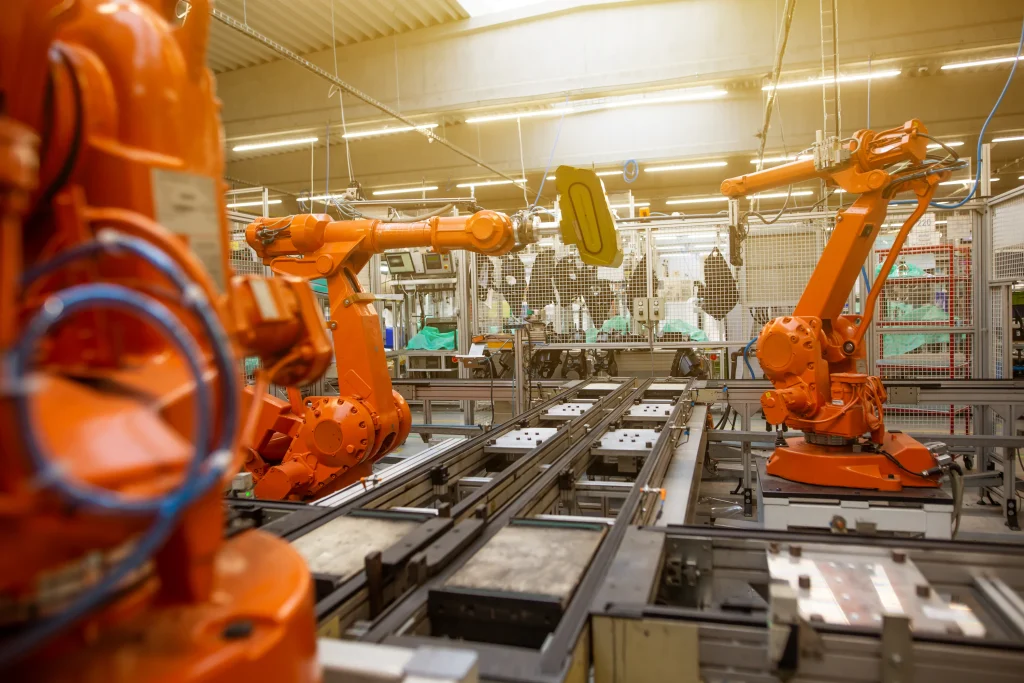
(Image Credit: Morning Brew on Unsplash)
 Interested in hearing industry leaders discuss subjects like this? Attend the co-located 5G Expo, IoT Tech Expo, Blockchain Expo, AI & Big Data Expo, and Cyber Security & Cloud Expo World Series with upcoming events in Silicon Valley, London, and Amsterdam.