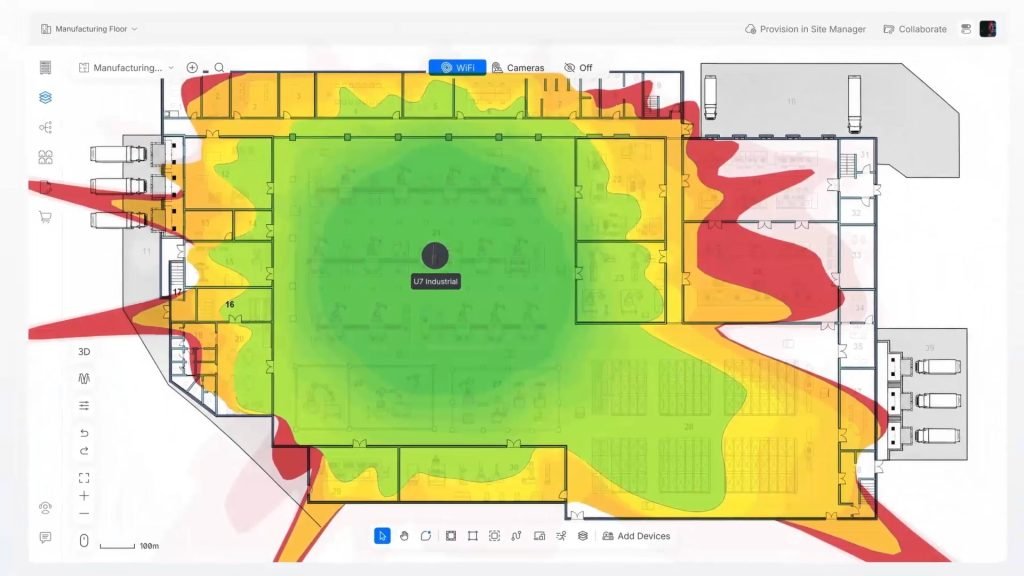
Industrial operators can automate IoT onboarding across Wi-Fi networks through a joint specification from the Wireless Broadband Alliance (WBA) and FIDO Alliance. The framework pairs the WBA’s federated OpenRoaming architecture with FIDO Device Onboard protocols.
Field technicians can spend hours manually configuring individual MAC addresses, Wi-Fi protected access keys, and administrative credentials across factory floors. This workflow eliminates that manual setup entirely. Devices authenticate at initial power-on, complete cryptographic handshakes, and migrate directly to designated enterprise segments with zero manual intervention.
Tiago Rodrigues, President and CEO of the WBA, said: “This work marks an important step, extending OpenRoaming further into IoT and edge device use cases. By combining OpenRoaming’s secure, interoperable connectivity with FIDO Device Onboard, we have shown how devices can establish a trusted first connection, begin automated onboarding and then transition to their designated operational network.
“It demonstrates the value of collaboration across the Wi-Fi, identity, manufacturing, and IoT ecosystems, while providing a standards-based foundation for further interoperability testing, product development and real-world trials that can help reduce deployment overhead and strengthen device security at scale.”
Factory credential injection decouples bootstrap connectivity
Inside the factory, device initialisation systems query the OpenRoaming identity provider credential management interface for an EAP-TLS client certificate. Assembly lines write this certificate, its intermediate authority chain, and a unique FDO credential package into a tamper-resistant hardware element. The cryptographic private key remains permanently sealed on the chip. Factory systems generate a digital ownership voucher that follows the physical supply chain to the customer.
Production devices operate through a structured two-stage network transition. Upon first electrical power-up, an onboard client queries local airwaves for the OpenRoaming Roaming Consortium Organisation Identifier. The hardware authenticates automatically using the factory EAP-TLS certificate to secure temporary internet routing.
Once the terminal receives an IP address, it initiates FDO Transfer of Ownership steps TO1 and TO2. The client queries a rendezvous server to locate the owner’s management infrastructure, completes a mutual verification exchange, and downloads final configuration payloads. The terminal then severs its bootstrap radio link and reattaches to the client’s private operational network.
Richard Kerslake, Market Development, Connected Standards at FIDO Alliance, commented: “Enterprises no longer have to choose between speed and security.
“By pairing FIDO Device Onboard with OpenRoaming, devices can now authenticate, locate their network, and configure themselves automatically – with zero manual setup and zero risk of tampering. It’s the secure, friction-free blueprint that IoT and Edge applications need to scale in the real world.”
Hardware security testing validates two-pass onboarding architecture
Vietnamese security firm VinCSS verified the system architecture in a proof-of-concept deployment. Engineers flashed Linux onto a Raspberry Pi equipped with a discrete secure element to safeguard operational keys. The test unit parsed its embedded credentials, attached to an active OpenRoaming access point, and finished the TO1 rendezvous discovery without operator input.
Although the test bench shared one private key across both authentication protocols, commercial deployments will require separate certificates to isolate network transit from identity ownership.
Deploying this zero-touch model at volume imposes fresh infrastructure responsibilities on hardware manufacturers. Vendors must operate resilient, internet-accessible authentication nodes or contract managed public key infrastructure providers like SecureG.
Working groups from Cisco, Intel, and Boldyn Networks are expanding the standard to cover non-standard environments.
Cisco Fellow Mark Grayson said: “Setting up large numbers of connected devices manually is a major hurdle for businesses today. This work empowers the manufacturing and enterprise industries to automatically connect and secure devices right out of the box, helping companies grow their networks more simply and securely.”
Dr. Necati Canpolat, Sr. Staff, Next Generation and Standards at Intel, added: “By combining trusted device identity established during manufacturing with OpenRoaming and FIDO Device Onboard, this work demonstrates a practical path towards automated onboarding across diverse network environments. It is an important step towards making secure, zero-touch deployment easier to implement at scale.”
A forthcoming specification paper will outline onboarding procedures for air-gapped industrial facilities that block external internet gateways. Engineers are designing proxy helper devices so low-power sensors unable to execute local Passpoint stacks can inherit automated provisioning.
See also: Cognex to acquire RealSense for $500M in factory edge AI deal

Want to learn more about the IoT from industry leaders? Check out IoT Tech Expo taking place in Amsterdam, California, and London. The comprehensive event is part of TechEx and is co-located with other leading technology events including AI & Big Data Expo and the Cyber Security Expo. Click here for more information.
IoT News is powered by TechForge Media. Explore other upcoming enterprise technology events and webinars here.